The highwayman meaning refers to a robber who attacked travelers on public roads, traditionally while riding a horse. Highwaymen became notorious in Britain and Ireland during the 17th and 18th centuries, when isolated country roads and stagecoach journeys offered opportunities for robbery. Their history includes famous criminals such as Dick Turpin and Claude Du Vall, the legendary demand “Stand and deliver!”, and the romantic image of the gentleman outlaw.
A highwayman was more than an ordinary thief in popular imagination. He represented danger on lonely roads, daring escapes, and sometimes a rebellious figure who challenged the social order. However, the historical reality was often harsher than the stories suggest. Understanding the definition of highwayman, the origins of highway robbery, the differences between a highwayman and a footpad, and the influence of literature helps explain why this old word remains familiar today.
What Does Highwayman Mean?
A highwayman was a person who robbed travelers on public roads, usually while riding a horse and threatening victims with a weapon. Highwaymen commonly targeted stagecoaches, merchants, and wealthy passengers carrying cash or valuables. The term is strongly associated with Britain during the 17th and 18th centuries, although similar road robbers existed in other countries and periods.
The word describes a particular type of criminal rather than every person who commits theft on a road. A highwayman traditionally used the mobility of a horse to approach a traveler, demand possessions, and escape before authorities could respond.
Highwayman Meaning in Simple Words
In simple words, a highwayman is a robber who attacks people traveling on a road. The traditional highwayman rides a horse, carries a pistol, and demands money or valuables from travelers. Unlike an ordinary pickpocket, who steals secretly, a highwayman usually confronts the victim directly and uses the threat of violence.
For example, imagine a merchant traveling by stagecoach through the English countryside in 1750. A masked rider blocks the road, points a pistol toward the coach, and demands the merchant’s purse. That rider would fit the historical definition of a highwayman.
Here are the main characteristics of a traditional highwayman:
- Location: Public roads, country lanes, and routes used by stagecoaches.
- Method: Direct robbery, often involving threats or weapons.
- Transportation: Usually a horse, which helped the robber approach and escape quickly.
- Targets: Travelers carrying money, jewelry, documents, or other valuables.
- Historical association: Especially strong in Britain during the 17th and 18th centuries.
The word often appears in historical novels, poems, period dramas, and stories about daring outlaws. In those settings, a highwayman may appear charming or heroic, but the original meaning refers to a person who commits robbery.
Highwayman: Word Origin and Meaning
The word highwayman combines highway and man. A highway is a public road or major route used for travel, while the ending -man identifies a person associated with an activity or role.
The term developed around the idea of a criminal who preyed on people using public roads. In earlier centuries, travelers often faced greater risks outside towns, where fewer people could witness a crime and local authorities had limited ability to respond quickly.
The word also reflects a historical distinction between different kinds of thieves. A highwayman was associated with horseback robbery, while a footpad typically robbed people on foot. A pirate, by contrast, committed robbery or related crimes at sea.
The term has survived long after horseback highway robbery declined. Today, writers may use highwayman literally when discussing history or figuratively when describing a person who takes money through intimidation or unfair dealing.
For instance, someone might call an excessively exploitative merchant a “highwayman” to suggest that the merchant charges outrageous prices. This is a figurative use, not a claim that the person literally robs travelers on horseback.
The History of Highwaymen
Highwaymen became prominent in British history because travel could be dangerous, valuable goods moved between towns, and organized policing was limited. During the 17th and 18th centuries, travelers often relied on stagecoaches, horses, and hired carriages. These journeys created opportunities for criminals who knew the roads and could escape quickly.
Highway robbery did not begin in Britain, nor did it belong exclusively to one century. However, the British highwayman became a recognizable historical figure through newspaper reports, criminal biographies, ballads, novels, and popular entertainment.
When Were Highwaymen Most Active?
Highwaymen are most closely associated with the 17th and 18th centuries, particularly in England. Their reputation continued into the early 19th century, although the risks and opportunities surrounding road travel changed over time.
Several developments helped create the conditions in which highway robbery flourished:
- Expanding stagecoach travel: Coaches carried passengers, mail, and valuable goods between towns and cities.
- Limited rural policing: Officers could struggle to cover long distances and respond to crimes outside settlements.
- Cash-based transactions: Travelers often carried coins and other portable valuables.
- Slow communication: News of a robbery might take time to reach officials in another town.
London and the roads leading to it became particularly associated with highway robbery because they connected commercial centers with wealthy travelers. Yet highwaymen did not operate only near the capital. Major routes throughout England and parts of Ireland also became associated with road crime.
The danger varied by route, period, and circumstances. Highwaymen were not waiting behind every tree, and most travelers completed their journeys without being robbed. Still, the possibility of encountering an armed criminal helped sustain the highwayman’s reputation.
Why Did Highwaymen Target Travelers?
Highwaymen generally sought victims who might carry valuables and who could be approached with limited risk of immediate interruption. A merchant transporting business receipts presented a different opportunity from a laborer traveling with few possessions.
Stagecoaches were attractive targets because they brought several travelers together. A robber who stopped a coach could threaten multiple passengers without having to search for each person separately. Some coaches also carried mail or commercial goods.
The logic behind highway robbery was straightforward: portable wealth, predictable routes, and limited protection created opportunities for theft.
Consider three common types of potential targets:
| Target | Why a highwayman might target them | Possible valuables |
| Wealthy coach passenger | Might carry personal wealth while traveling | Coins, jewelry, watches |
| Merchant | Could transport money or business proceeds | Cash, account papers, small valuable goods |
| Mail or stagecoach | Might carry several passengers or valuable deliveries | Passenger possessions, mail, commercial items |
These examples describe possible targets, not a universal pattern. Highwaymen differed in their methods, and some robbed individuals on horseback rather than stopping a coach.
Travelers responded in various ways. Some traveled in groups, chose more secure routes, or carried weapons for protection. Wealthier passengers could hire escorts or travel with servants. Such precautions did not eliminate the danger, but they show that highway robbery influenced how people thought about safety on the road.
Why Did Highwaymen Disappear?
Highwaymen declined as transportation, policing, and financial practices changed. Their traditional approach depended on finding vulnerable travelers, taking portable valuables, and escaping before authorities could organize a response. Improvements in several areas made that approach harder to sustain.
Better policing played an important role. London’s Bow Street Runners, established in the mid-18th century, helped develop more organized methods of investigation and crime detection. Mounted patrols and other enforcement efforts also improved security on important routes.
The decline was gradual rather than the result of a single invention or law. Highway robbery continued after policing reforms began, and the timing varied by location.
Other changes also mattered:
- Improved roads and transport: Better-maintained routes and more organized travel gradually changed the conditions that highwaymen exploited.
- More effective communication: Authorities could share information about suspects and crimes more efficiently over time.
- Financial changes: The growing use of banknotes and other financial instruments altered how people carried wealth, although paper money itself was not a simple solution because it could also be stolen.
- Greater enforcement: Investigation, prosecution, and punishment raised the risks for offenders.
- Changing travel patterns: Commercial and passenger transport evolved, reducing the importance of some traditional targets and methods.
By the 19th century, the classic image of a masked rider stopping a stagecoach with a pistol had become increasingly associated with the past. Road robbery did not disappear, but the traditional highwayman became less common.
How Did Highwaymen Operate?
A highway robbery generally involved confronting a traveler, threatening force, and taking possessions. Highwaymen often depended on surprise, mobility, and their knowledge of local roads. Their reputation for boldness came partly from the public nature of the crime: unlike a burglar who entered a house secretly, a highwayman might openly challenge a coach full of passengers.
Popular stories sometimes present highway robbery as a carefully choreographed encounter with witty dialogue and impeccable manners. Actual incidents could be frightening, unpredictable, and violent.
What Did “Stand and Deliver!” Mean?
“Stand and deliver!” was a command associated with highwaymen that meant the traveler should stop and surrender their possessions. The word stand ordered the victim to halt, while deliver meant to hand over the requested valuables.
The phrase survives because it captures the traditional highwayman’s method in just three words. It is also memorable dialogue, making it useful in plays, novels, films, and humorous modern references.
Imagine a rider appearing beside a carriage and shouting, “Stand and deliver!” The passengers would understand that the rider expected them to stop and give up their money or valuables. Refusal could lead to threats or violence.
The expression has also developed a figurative meaning. Someone might jokingly say “Stand and deliver!” when demanding payment from a friend who owes them money. In that situation, the speaker borrows the language of historical robbery without making a literal threat.
What Did “Your Money or Your Life!” Mean?
“Your money or your life!” expresses an ultimatum: surrender your possessions or face the possibility of serious harm. It emphasizes the threat that made highway robbery different from ordinary theft.
A pickpocket attempts to take something without being noticed. A highwayman traditionally confronted the victim directly, using fear to force compliance. The demand placed the traveler in a dangerous position because resisting an armed robber could have severe consequences.
The phrase became a familiar part of the highwayman’s popular image through stories and entertainment. It is now commonly used in jokes, cartoons, and historical dramas.
The line should not be treated as a verified quotation from every highway robbery. It represents a recognizable literary expression associated with the crime, rather than proof that all highwaymen used the same words.
What Did Highwaymen Wear and Carry?
Highwaymen are often pictured wearing dark riding coats, tall boots, broad-brimmed hats, and face coverings. Some illustrations show them with tricorn hats, which had three upturned sides and were fashionable in parts of Europe during the period.
Their clothing served practical and social purposes. Riding clothes helped them travel on horseback, while hats and coats were ordinary garments of the era. A disguise might help conceal identity, but no single outfit defined every highwayman.
Commonly associated items include:
- Horses: Provided speed and mobility across long distances.
- Pistols: Could be used to threaten victims and sometimes inflict violence.
- Swords or other weapons: Appeared in some historical accounts and depictions.
- Hats and coats: Ordinary period clothing that later became part of the familiar outlaw costume.
- Face coverings: Sometimes used in depictions or accounts to conceal identity.
It is important to distinguish the recognizable costume from a uniform. Highwaymen did not belong to an organized profession with standard clothing. Their appearance depended on wealth, location, personal preference, and circumstance.
A well-dressed robber could look like a gentleman, which sometimes helped create opportunities to approach travelers. However, fashionable clothing did not make the person honorable, and the image of the impeccably dressed outlaw owes much to later storytelling.
Highwayman vs. Footpad vs. Pirate
A highwayman, a footpad, and a pirate all belong to the broad category of criminals who rob people, but the terms refer to different settings and methods. A highwayman traditionally rode a horse and robbed road travelers. A footpad operated on foot, while a pirate committed robbery or related crimes at sea.
| Feature | Highwayman | Footpad | Pirate |
| Main setting | Public roads and country routes | Streets, lanes, and roads | Seas and waterways |
| Traditional method | Often robbed from horseback | Robbed while traveling on foot | Attacked ships or people at sea |
| Typical targets | Coach passengers and road travelers | Pedestrians and other people on land | Ships, crews, passengers, and cargo |
| Mobility | Usually a horse | Walking or running | Boats or ships |
| Common cultural image | Mounted outlaw | Street or road thief | Armed seafarer |
| Main distinction | Horseback road robbery | Robbery on foot | Maritime crime |
These descriptions summarize traditional usage. Real criminals did not always fit neatly into one category, and the terms could overlap in broader accounts of crime.
Highwayman vs. Footpad
The main difference between a highwayman and a footpad is how the robber traveled and approached victims. A highwayman was traditionally associated with horseback robbery, while a footpad committed robbery on foot.
A footpad might target a pedestrian in a narrow lane or an isolated street. A highwayman could approach a carriage, stop a rider, or escape on horseback after taking valuables.
The distinction mattered because a horse offered speed and range. It could help a robber move between towns or leave the scene quickly. A footpad depended more heavily on walking routes, nearby hiding places, and the ability to escape on foot.
Both types of criminal could use threats or violence. It would be misleading to assume that every footpad was more brutal than every highwayman or that highwaymen were generally courteous.
Highwayman vs. Pirate
The distinction between a highwayman and a pirate is primarily geographical. Highwaymen robbed people on land, especially travelers using public roads. Pirates operated on the water, attacking ships or people and taking property through unlawful violence or coercion.
For example, a rider who stops a merchant’s carriage on a country road is acting as a highwayman. A person who boards a merchant vessel and seizes its cargo is committing piracy.
The two figures share several characteristics in popular culture. Both are often portrayed as daring outlaws who challenge authority, escape capture, and live outside conventional society. Stories about both groups can romanticize criminal behavior by focusing on adventure rather than the harm inflicted on victims.
Their legal and historical circumstances were different, however. Piracy involved maritime activity and could cross territorial boundaries, while highway robbery took place along land routes within particular jurisdictions.
Highwayman vs. Modern Highway Robber
A historical highwayman and a modern road robber share the basic idea of stealing from travelers, but their methods and context differ.
A traditional highwayman usually relied on a horse and a direct confrontation on a public road. Modern road-related crimes may involve vehicles, organized groups, weapons, or other methods that reflect contemporary transportation and security systems.
The word highwayman is therefore most accurate when discussing historical figures or using the term figuratively. For a present-day crime, words such as road robber, armed robber, or carjacker may be more precise, depending on what happened.
A carjacker, for example, steals or attempts to steal a motor vehicle from someone through force or intimidation. Not every road robbery is carjacking, and the legal definitions depend on the jurisdiction.
The comparison is useful because it shows how the underlying crime can persist even when the technology and setting change. Horses and stagecoaches once shaped the classic highwayman; motor vehicles and modern transport shape many contemporary road crimes.
Famous Highwaymen in History and Folklore
Some highwaymen became famous because of their crimes, while others gained lasting reputations through stories written long after their deaths. Their histories reveal an important distinction: the real criminal and the romantic outlaw are not always the same person.
Newspapers, trial accounts, ballads, novels, and stage performances helped shape public perceptions of highwaymen. Over time, dramatic stories often became more memorable than the historical evidence.
Dick Turpin: The Most Famous English Highwayman
Historical figure: 1705–1739
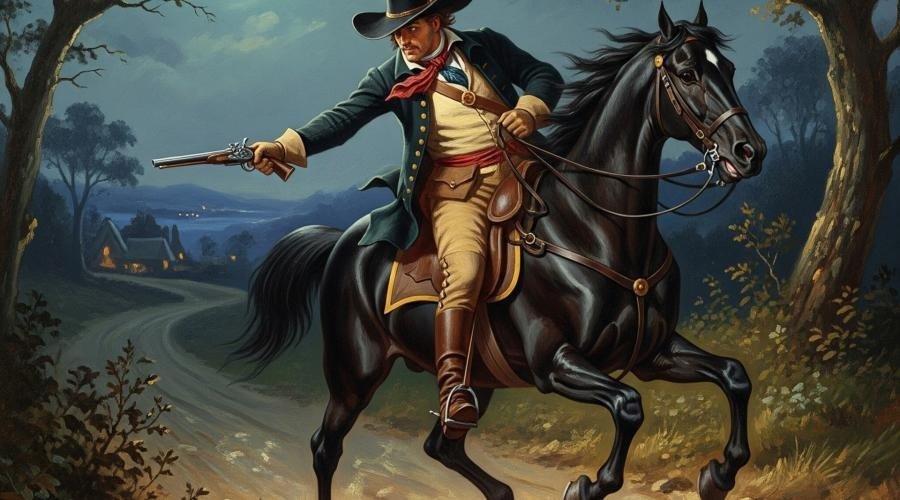
Dick Turpin, whose name was Richard Turpin, is one of the best-known figures associated with English highway robbery. Born in 1705, he became involved in criminal activity that included burglary, horse theft, and robbery. He was executed in York on April 7, 1739, after being convicted of horse theft.
historyofyork.org.uk
+1
Turpin’s fame rests partly on the gap between his documented life and the heroic character later writers created.
His popular story includes a legendary overnight ride from London to York on a horse named Black Bess. According to the familiar tale, Turpin completed the extraordinary journey to establish an alibi and evade capture.
However, the famous ride was not a verified achievement by Turpin. The story was associated with an earlier highwayman, John Nevison, and later became attached to Turpin through popular fiction. William Harrison Ainsworth’s novel Rookwood, published in 1834, helped establish the familiar version of the legend.
Sky HISTORY TV Channel
+1
The historical Turpin was not simply the charming, generous outlaw of later stories. His criminal career involved serious offenses, and his reputation as a daring gentleman grew substantially after his death.
Turpin’s story illustrates how popular culture can transform a criminal into a folk character. The legend survived because it offered adventure, speed, danger, and an apparently impossible escape.
Claude Du Vall: The Gentleman Highwayman
Historical figure: circa 1643–1670
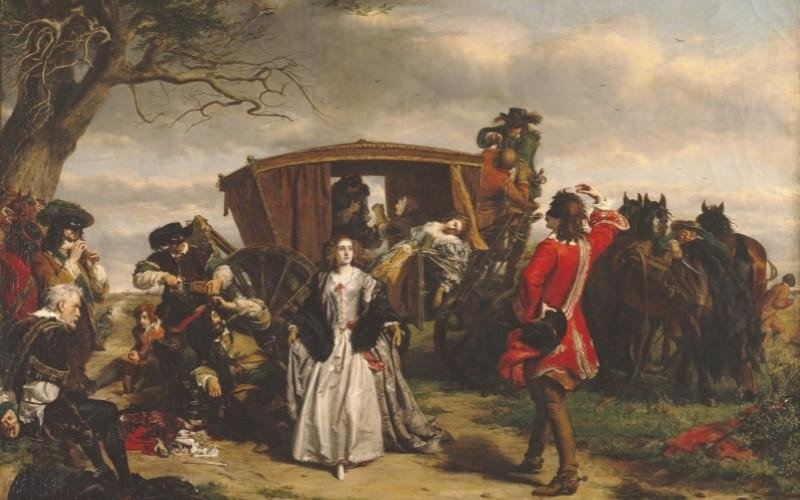
Claude Du Vall, also spelled Claude Duval or Du Vall, was a French-born highwayman who operated in England during the 17th century. He became associated with the image of the courteous, fashionable robber who treated victims with unusual politeness.
Wikipedia
+1
Stories about Du Vall often describe him as a gentleman who appreciated fine clothing, music, and elegant manners. Some tales claim that he interrupted robberies to dance with a female passenger or showed special courtesy toward women.
These stories helped establish the gentleman highwayman as a recognizable character in English folklore. They suggested that a robber could possess charm and social sophistication despite living outside the law.
Yet such stories require caution. Du Vall’s reputation rests partly on accounts that became embellished over time. His supposed chivalry should not be confused with proof that highway robbery was generally restrained or harmless.
Du Vall was executed at Tyburn on January 21, 1670. His death did not end his cultural influence. Later writers and artists continued to use his story to explore the tension between criminal conduct and gentlemanly appearance.
Sky HISTORY TV Channel
+1
His legacy also explains why the word highwayman can carry a romantic tone that words such as robber or thief do not usually convey. The historical term evokes an entire tradition of stories about daring riders, fashionable clothing, and dramatic encounters on lonely roads.
John Nevison: The Highwayman Behind the Famous Ride
John Nevison, often called Swift Nick, is an important figure in understanding the Dick Turpin legend. He was a 17th-century highwayman associated with a famous story about riding from Kent to York in a remarkably short time.
According to the traditional account, Nevison robbed a traveler near Rochester and then rode north to York to establish an alibi. The journey supposedly allowed him to appear far from the scene of the crime. Later accounts connected this feat with Turpin, helping create one of the most enduring legends in British criminal folklore.
Sky HISTORY TV Channel
+1
The connection demonstrates how stories migrate between historical figures. A dramatic event becomes part of popular memory, and later writers attach it to a better-known character.
Nevison’s story also shows why historical research must distinguish between contemporary evidence and later retellings. The fact that a story appears repeatedly in popular accounts does not establish that every detail happened as described.
Alfred Noyes’ The Highwayman
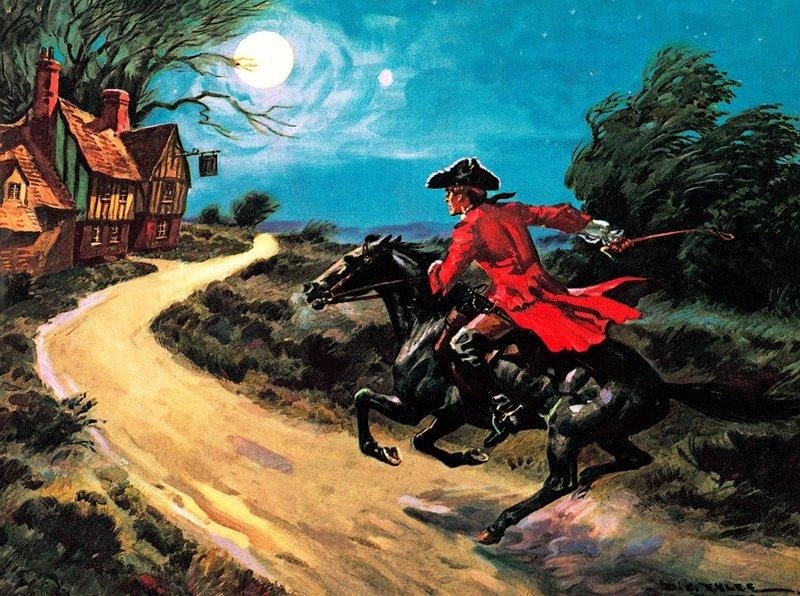
Alfred Noyes’ narrative poem The Highwayman, published in 1906, helped preserve the romantic image of the outlaw for modern readers. Rather than presenting a historical biography, the poem tells a dramatic story involving a highwayman, his beloved Bess, and a tragic conflict with soldiers.
The poem is known for its rhythmic language, vivid imagery, and suspense. Its highwayman is a romantic figure whose love and daring place him in a world of danger. Bess also plays an essential role in the tragedy, making the story more than a simple tale of robbery.
The work remains useful for understanding how literature shapes the meaning of a word. A reader who encounters highwayman in Noyes’ poem may imagine a passionate, tragic hero rather than a criminal who threatens travelers for money.
That distinction matters when interpreting the term in different contexts:
- Historical writing: A highwayman is a robber who targets road travelers.
- Romantic poetry: The highwayman may become a daring outlaw caught in a tragic love story.
- Popular entertainment: The figure may represent rebellion, adventure, danger, or freedom.
- Everyday speech: The word may be used humorously or metaphorically for someone who demands excessive payment.
The poem’s emotional power comes from its storytelling, not from its status as a factual account of an actual highway robbery.
Were Highwaymen Really Gentlemen?
Highwaymen were not generally honorable gentlemen who robbed the rich and protected the people with low-income. That image grew through folklore, ballads, novels, and dramatic performances. Some criminals may have dressed fashionably or behaved politely during particular encounters, but those qualities did not change the nature of their crimes.
The popular image developed because a stylish outlaw made a more compelling story than an ordinary criminal. A highwayman could be presented as brave, independent, and opposed to authority. Those characteristics appealed to readers who enjoyed stories about people living beyond social rules.
Why Were Highwaymen Romanticized?
The romantic highwayman combines several attractive storytelling elements: danger, freedom, confidence, rebellion, and the possibility of escape. A mounted outlaw traveling through moonlit countryside creates a vivid scene, especially when a story contrasts that figure with powerful officials or wealthy travelers.
Literature also allowed writers to explore questions about social class and justice. Some fictional highwaymen appeared to challenge an unfair system, while others behaved like charming rogues whose manners softened the impression of their crimes.
Several factors helped romanticize the figure:
- Dramatic settings: Isolated roads, forests, inns, and moonlit landscapes create suspense.
- Memorable dialogue: Expressions such as “Stand and deliver!” give the character an instantly recognizable voice.
- Fashionable appearance: Riding coats, boots, hats, and horses create a distinctive visual identity.
- Rebellion against authority: Outlaws can become symbols of independence in fiction.
- Romantic relationships: Stories about love and sacrifice can make a criminal character seem tragic rather than threatening.
These storytelling techniques do not prove that historical highwaymen behaved like their fictional counterparts. They explain why audiences continued to find the character appealing long after the crime itself declined.
What Is the Difference Between Myth and Historical Fact?
The most useful way to understand highwaymen is to separate documented events from later embellishments. A historical person may have committed real crimes, while stories about their bravery, generosity, or extraordinary escapes may have developed afterward.
Dick Turpin provides a clear example. His criminal career and execution are historical events, but the famous ride to York and the horse Black Bess belong to the later legend surrounding him. Ainsworth’s Rookwood helped turn Turpin into a romantic figure nearly a century after his death.
historyofyork.org.uk
+1
The same caution applies to Claude Du Vall. His reputation for courteous behavior helped shape the gentlemanly highwayman archetype, but popular anecdotes about his manners should not be accepted automatically as verified accounts.
A simple comparison helps:
| Popular image | Historical perspective |
| Highwaymen were daring gentlemen. | They were criminals who robbed travelers, sometimes using threats or violence. |
| They stole from the rich and gave to the people with low-income. | That motive belongs more to romantic outlaw stories than to a reliable description of highwaymen generally. |
| Dick Turpin completed an extraordinary ride to York. | The famous ride was a legend later associated with Turpin. |
| Highwaymen followed a code of honor. | Individual behavior varied, and no universal code governed highway robbery. |
| A fashionable appearance indicated good character. | Clothing and manners did not make robbery less criminal. |
The lesson is simple: folklore explains a highwayman’s reputation, while historical evidence helps establish what the person actually did.
How to Use Highwayman in a Sentence
The word highwayman works best when describing a historical robber, a fictional outlaw, or a person being compared metaphorically to such a criminal. It is a countable noun, so you can write a highwayman, the highwayman, or several highwaymen.
The plural form is highwaymen, not highwaymans.
Highwayman Example Sentences
Here are examples showing how the word appears in different contexts.
Historical use
- The highwayman stopped the stagecoach and demanded money from its passengers.
- Travelers feared highwaymen who operated on isolated roads in 18th-century England.
- The museum displayed an illustration of a highwayman holding up a carriage.
Literary use
- The novel portrays the highwayman as a charming but dangerous outlaw.
- Alfred Noyes’ The Highwayman tells a tragic story of love and sacrifice.
- The poet used the highwayman as a symbol of freedom and rebellion.
Figurative use
- The customer jokingly called the shopkeeper a highwayman after seeing the enormous bill.
- The travelers described the excessive toll as a highwayman’s demand.
- In the comedy, the character behaves like a highwayman whenever money comes up.
These examples show that context determines whether the word is literal or figurative. In a history book, it usually refers to a road robber. In a poem or joke, it may suggest a broader image of danger, boldness, or unfair demands.
Synonyms and Related Words for Highwayman
Several words share part of the meaning of highwayman, but each has its own emphasis.
| Word | Meaning | How it differs from highwayman |
| Robber | A person who takes property through force or threats | A broad term that covers many kinds of robbery |
| Bandit | An outlaw who commits robbery, often in groups or outside the law | Does not necessarily imply horseback travel |
| Brigand | A member of a group that robs travelers, especially in remote areas | Often suggests organized or group-based robbery |
| Outlaw | A person who lives outside the law or is treated as a criminal fugitive | Broader than robbery; not every outlaw is a highwayman |
| Footpad | A robber who operates on foot | Specifically contrasts with the traditional mounted highwayman |
| Pirate | A person who commits robbery or related crimes at sea | Refers to maritime rather than road crime |
| Thief | A person who steals property | Broadly includes theft without direct confrontation |
Choose a synonym according to the details you want to communicate. Robber is the most general alternative. Footpad is useful when discussing historical road crime, while brigand often suggests an outlaw operating in a group or in a remote region.
Frequently Asked Questions About Highwayman Meaning
What is a highwayman in simple terms?
A highwayman was a robber who targeted travelers on public roads, traditionally while riding a horse. Highwaymen often threatened passengers with weapons and demanded money or other valuables. The term is most strongly associated with Britain during the 17th and 18th centuries.
Were highwaymen actually gentlemen?
Most highwaymen should be understood as criminals rather than honorable gentlemen. Some cultivated fashionable appearances or gained reputations for courteous behavior, but later novels and folklore exaggerated these qualities. The romantic image of the gentleman highwayman differs considerably from the reality of robbery and intimidation.
What is the modern equivalent of a highwayman?
Modern road robbers and carjackers share some similarities with historical highwaymen because they target travelers or people using roads. However, the terms are not interchangeable. A highwayman traditionally robbed people on horseback, while modern offenders may use motor vehicles or other methods.
Why did highwaymen say “Stand and deliver”?
The phrase “Stand and deliver!” commanded travelers to stop and surrender their possessions. Stand meant to halt, while deliver meant to hand over valuables. The expression became closely associated with highwaymen through historical storytelling and popular entertainment.
Why did highwaymen stop existing?
Traditional highwaymen declined as policing improved, transportation changed, and authorities became more effective at investigating road crime. Financial practices also evolved, changing how people carried money. Highway robbery did not disappear entirely, but the classic horseback robber became less common during the 19th century.
Who was the most famous highwayman?
Dick Turpin is one of the most famous English highwaymen. He lived from approximately 1705 to 1739 and became a legendary figure after his execution. His supposed overnight ride to York on Black Bess was popularized by fiction rather than established as a historical achievement.
Conclusion: Understanding the Meaning of Highwayman
The highwayman meaning is straightforward: a highwayman was a robber who targeted travelers on public roads, traditionally while riding a horse. The term evokes a particular period of British history when stagecoaches, isolated routes, and limited policing created opportunities for road robbery.
Understanding the word also means recognizing the difference between history and folklore. Dick Turpin, Claude Du Vall, and John Nevison became famous through a mixture of documented events and stories that grew over time. Alfred Noyes’ The Highwayman added another layer to the tradition by presenting the outlaw as a tragic romantic figure.
Remember these key distinctions:
- A highwayman traditionally robbed travelers on horseback.
- A footpad robbed people on foot.
- A pirate committed robbery or related crimes at sea.
- The gentleman highwayman is largely a romanticized cultural image, not a reliable description of every historical offender.
If you encounter the word in a novel, poem, history lesson, or everyday conversation, consider the context. It may describe a real historical criminal, a fictional outlaw, or someone being compared figuratively to a robber. Understanding that distinction will help you interpret the word accurately and use it confidently in your own writing.