Fresh in slang usually means cool, stylish, attractive, impressive, or new-looking. If someone says, “Your outfit looks fresh,” they’re typically complimenting your style, appearance, or overall vibe.
The slang meaning of fresh depends on context. It can describe fashionable clothes, a clean look, something new or original, or a person who seems confident and cool. In some contexts, “fresh” can also mean bold, disrespectful, or overly familiar, especially in expressions such as “Don’t get fresh with me.”
So, when you see fresh in slang, look at the situation and tone: it may be a positive compliment meaning stylish or impressive, or a negative remark referring to cheeky or disrespectful behavior.
Quick Answer: What Does Fresh Mean in Slang?
Fresh means stylish, fashionable, cool, or impressive when used as a compliment. For example, “Your outfit looks fresh” means your clothes look great. In another context, getting fresh means behaving cheekily, speaking disrespectfully, or crossing a boundary. The surrounding conversation determines whether the word expresses admiration or criticism.
Here are the two main meanings at a glance:
| Expression | Meaning | Example |
| Fresh | Stylish or fashionable | “Those shoes are fresh.” |
| Looking fresh | Looking attractive or well-dressed | “You’re looking fresh today.” |
| Fresh style | Modern, original, or appealing style | “She has a fresh sense of style.” |
| Getting fresh | Acting cheeky or disrespectful | “Don’t get fresh with me.” |
| Fresh idea | New, original, or interesting idea | “That’s a fresh approach.” |
If you’re searching for new slang words, you’ll also find a separate glossary below covering popular internet expressions and their meanings.
What Does It Mean to Be Fresh?
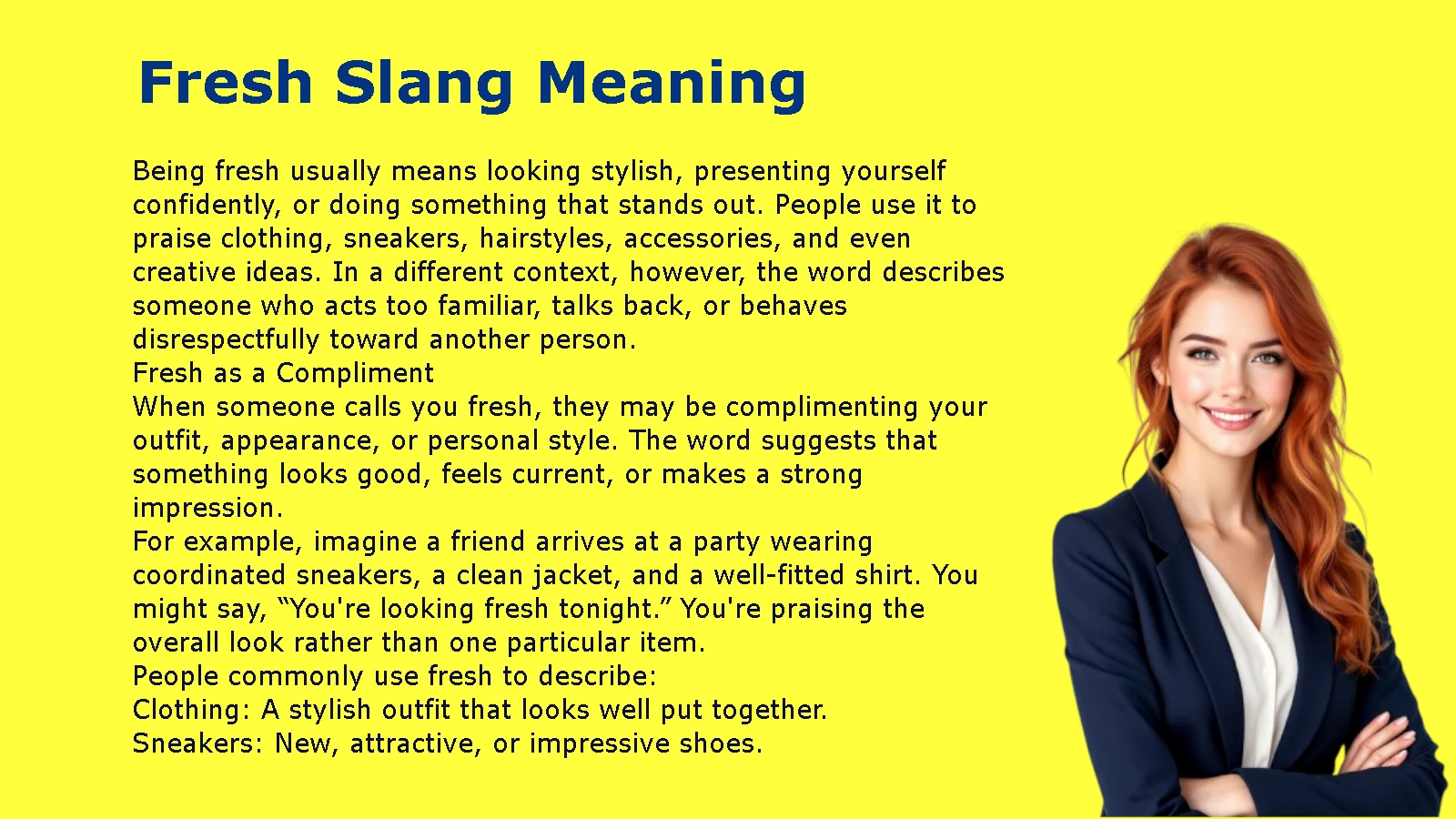
Being fresh usually means looking stylish, presenting yourself confidently, or doing something that stands out. People use it to praise clothing, sneakers, hairstyles, accessories, and even creative ideas. In a different context, however, the word describes someone who acts too familiar, talks back, or behaves disrespectfully toward another person.
Fresh as a Compliment
When someone calls you fresh, they may be complimenting your outfit, appearance, or personal style. The word suggests that something looks good, feels current, or makes a strong impression.
For example, imagine a friend arrives at a party wearing coordinated sneakers, a clean jacket, and a well-fitted shirt. You might say, “You’re looking fresh tonight.” You’re praising the overall look rather than one particular item.
People commonly use fresh to describe:
- Clothing: A stylish outfit that looks well put together.
- Sneakers: New, attractive, or impressive shoes.
- Hairstyles: A neat haircut or a distinctive look.
- Accessories: Watches, jewelry, hats, or bags that complete an outfit.
- Creative work: An original design, a new idea, or a distinctive approach.
- Personal presentation: Someone who looks confident, polished, and ready for the occasion.
Consider these examples:
- “Your new jacket is fresh.” — The jacket looks stylish.
- “Those kicks are fresh.” — The sneakers look impressive.
- “That’s a fresh design.” — The design feels original or appealing.
- “You came through looking fresh.” — You arrived looking particularly stylish.
The compliment can refer to something new, but it doesn’t have to. A favorite pair of older sneakers can still look fresh if they’re clean, well-maintained, and stylish.
Key distinction: In slang, fresh often describes how something looks or feels rather than simply indicating that it was recently made or purchased.
Fresh as an Insult or Negative Expression
The phrase “getting fresh” has a different meaning. It usually describes someone behaving cheekily, speaking disrespectfully, or acting too boldly toward another person.
For example, a parent might say, “Don’t get fresh with me,” after a child responds with a rude comment. A manager might use the same expression when an employee crosses a professional boundary.
Common examples include:
- “Don’t get fresh with your teacher.” — Don’t speak to your teacher disrespectfully.
- “He got fresh with the security guard.” — He behaved rudely or acted too familiar.
- “Stop getting fresh and listen.” — Stop talking back or acting disrespectfully.
- “She was getting fresh with him.” — She was behaving boldly or suggestively, depending on the situation.
The negative meaning often involves attitude, boundaries, and respect. It doesn’t necessarily mean that someone is angry or aggressive. A person can get fresh by making an inappropriate joke, using an overly familiar tone, or challenging someone’s authority in a disrespectful way.
The phrase can also carry a flirtatious meaning. If someone says a person was “getting fresh” during a playful conversation, they may mean that the person was making suggestive remarks or behaving flirtatiously.
The exact interpretation depends on the relationship between the people and the tone of the exchange.
Fresh Meaning in Text Messages and Social Media
In texting, fresh most often works as a casual compliment when someone uses it to describe a person’s appearance, clothing, or style. However, a message containing the word can have a completely different meaning when the conversation concerns someone’s behavior.
Here are several examples:
| Text message | Likely meaning |
| “Your fit is fresh 🔥” | Your outfit looks great. |
| “Bro got fresh kicks” | He has stylish sneakers. |
| “That profile pic looks fresh” | The picture looks good or polished. |
| “Don’t get fresh with me.” | Don’t be disrespectful or cheeky. |
| “He’s getting a little fresh in the DMs.” | He’s acting overly familiar or possibly flirtatious. |
Context matters more than the word alone. An enthusiastic compliment in a conversation about clothes is unlikely to be an insult. A warning during an argument usually signals the opposite.
Social media also encourages creative uses of familiar words. Someone might describe a new video edit as fresh because it feels original, or praise a creator for bringing a fresh perspective to a familiar topic.
A quick texting example
Friend A: “Check out the sneakers I bought yesterday.”
Friend B: “Those are fresh 🔥”
Meaning: Friend B thinks the sneakers look stylish.
Now consider a different exchange:
Person A: “You need to finish your work before you leave.”
Person B: “You can’t tell me what to do.”
A: “Don’t get fresh with me.”
Meaning: Person A thinks the response was disrespectful or overly bold.
The word remains the same, but the social situation changes its meaning.
Fresh vs. Freshness: Are They Used the Same Way?
Fresh is an adjective in most of these examples. It describes a noun or someone’s condition. Freshness is a noun that refers to the quality of being fresh.
| Word or phrase | Meaning | Example |
| Fresh | Stylish, new, or impressive | “That’s a fresh outfit.” |
| Freshness | The quality of being fresh or new | “The design has a sense of freshness.” |
| Looking fresh | Looking stylish or well-presented | “You’re looking fresh today.” |
| Fresh style | A distinctive or appealing style | “He has a fresh style.” |
In casual slang, people are more likely to say “That outfit is fresh” than “That outfit has freshness.” The second sentence is grammatically possible, but it sounds more formal or descriptive.
Use fresh when you want to make a direct compliment. Use freshness when discussing the quality, originality, or newness of something.
Where Did Fresh Slang Come From?
The slang meaning of fresh developed through changing uses of English, including African American English and popular youth culture. Its associations with style, confidence, and originality became especially visible through hip-hop, music, fashion, and entertainment in the late 20th century.
The word itself is much older than modern slang. It has long described things that are new, recently made, or not stale. The slang sense builds on those existing ideas: something fresh feels new, distinctive, or impressive.
The History of Fresh as a Word for Cool
The connection between fresh and cool makes intuitive sense. Something fresh feels lively, different, or recently introduced. When people began applying the idea to clothing, personal appearance, and behavior, the word took on a social meaning.
Calling someone fresh could suggest that they had a distinctive look, carried themselves confidently, or understood the latest style. In this sense, freshness became a way to express originality and social appeal.
Language often develops this way. Words that describe physical qualities take on figurative meanings:
- Sharp can describe a pointed object or a stylish appearance.
- Clean can describe something free from dirt or a polished outfit.
- Hot can refer to temperature or something exciting and popular.
- Fresh can describe recently made food or a fashionable look.
These meanings overlap, but they are not identical. Calling an outfit fresh often emphasizes style and originality, while calling it clean can emphasize neatness and coordination.
Fresh in 1980s and 1990s Hip-Hop Culture
Related cultural reference: The Fresh Prince of Bel-Air
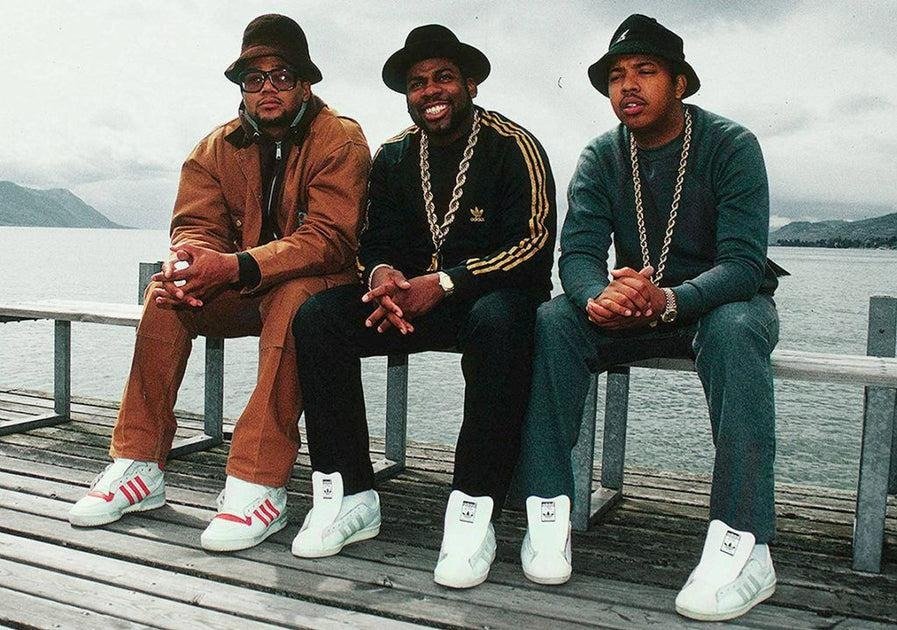
Hip-hop culture helped popularize the association between fresh style, self-expression, and confidence. Clothing, sneakers, hairstyles, music, dance, and personal presentation became important ways for artists and fans to communicate identity.
In this cultural setting, being fresh meant more than wearing expensive clothes. It could mean putting together a distinctive look, showing creativity, and carrying yourself with confidence.
Television also helped bring this language into wider popular culture. The Fresh Prince of Bel-Air, which premiered in 1990, featured Will Smith as a young man whose fashion, humor, and personality helped make the word recognizable to a broad audience.
The show did not invent the slang expression. Instead, it helped expose a style of language and cultural expression to viewers who might not have encountered it otherwise.
Three ideas help explain the word’s cultural significance:
- Personal style: Clothing and accessories can communicate identity without words.
- Originality: A fresh look stands out rather than simply copying everyone else.
- Confidence: Being fresh can describe the way someone presents themselves, not just what they wear.
These associations continue to influence how people use the word today.
How the Meaning of Fresh Has Changed Over Time
The core idea of fresh as stylish or impressive remains familiar, but slang changes as communities adopt new expressions.
| Period or setting | Common association |
| Earlier English usage | New, recent, lively, or not stale |
| Late 20th-century youth and hip-hop culture | Stylish, original, fashionable, or cool |
| 1990s popular entertainment | A recognizable expression associated with confident youth culture |
| Modern casual conversation | A compliment about clothing, sneakers, appearance, or creative work |
| Everyday expressions such as “getting fresh” | Cheeky, disrespectful, overly familiar, or flirtatious behavior |
The positive slang meaning has not disappeared. People still use fresh as a compliment, even though other terms such as fire, drip, and clean may be more common in particular communities or situations.
One important point: fresh is not exclusively Gen Z slang. It existed as slang before Gen Z entered the conversation. Younger speakers may continue using it, but that does not make the expression new.
How to Use Fresh in a Sentence
The easiest way to use fresh slang correctly is to identify what you’re describing. If you’re talking about appearance, fashion, or an original idea, fresh usually has a positive meaning. If you’re talking about someone’s attitude or behavior, the expression may sound critical.
Examples of Fresh as a Positive Expression
Use fresh when you want to compliment something stylish, appealing, or original.
- “Those new sneakers look fresh.” This means the sneakers look fashionable or impressive.
- “You came through with a fresh outfit.” This praises someone’s clothing and overall presentation.
- “That logo is fresh.” This suggests the design looks original, modern, or attractive.
- “Your haircut looks fresh.” This can mean the haircut looks neat and recently done.
- “That’s a fresh idea.” This means the idea feels new, interesting, or different from familiar approaches.
- “The DJ played a fresh track.” Depending on the conversation, this may mean the song is new, exciting, or particularly good.
- “You’ve got a fresh look today.” This compliments someone’s appearance.
Notice that the meaning changes slightly with the noun. Fresh sneakers are stylish, a fresh idea is original, and a fresh haircut may be both neat and recently done.
Examples of Fresh as a Negative Expression
When fresh refers to behavior, it can communicate disapproval. These examples show how the word works in common expressions.
- “Don’t get fresh with me.” Stop speaking disrespectfully or acting too familiar.
- “He got fresh with the coach.” He spoke or behaved in a cheeky, disrespectful way.
- “Stop being fresh and finish your homework.” Stop talking back and do what you’re supposed to do.
- “That was a fresh remark.” The comment was overly bold or disrespectful.
- “She’s getting fresh with him.” She may be acting flirtatiously or making suggestive comments.
- “Don’t get fresh just because your friends are watching.” Don’t use an audience as an excuse to behave disrespectfully.
The expression “don’t get fresh” is especially important to recognize because its meaning differs from the positive adjective used in fashion.
Examples of Fresh in Texting and Online Chats
Here are realistic conversations that show how people use the word in digital communication.
Example: Complimenting an outfit
Alex: “Just got this jacket. What do you think?”
Sam: “That jacket is fresh 🔥”
Sam means the jacket looks stylish.
Example: Reacting to a new idea
Maya: “What if we redesign the whole page with fewer colors?”
Leo: “That’s fresh. Let’s try it.”
Leo means the suggestion is original or appealing.
Example: Calling out disrespectful behavior
Dad: “Please lower your voice.”
Teen: “You don’t control everything I do.”
Dad: “Don’t get fresh with me.”
Here, fresh refers to a disrespectful attitude.
Example: Flirting in direct messages
Jamie: “You always look this good, or are you trying to impress me?”
Taylor: “Someone’s getting fresh 😂”
Taylor playfully suggests that Jamie is flirting or acting bold.
These examples show why a dictionary-style definition alone may not be enough. You need to consider the subject of the conversation, the relationship between the speakers, and the tone.
How to Respond When Someone Calls You Fresh
Your response should depend on whether the person is complimenting you, teasing you, or criticizing your behavior.
| Situation | Natural response |
| Someone compliments your clothes | “Thanks! Glad you like them.” |
| A friend praises your sneakers | “Appreciate it!” |
| Someone calls your idea fresh | “Thanks. I wanted to try something different.” |
| A friend jokes that you’re getting fresh | “I’m just messing with you.” |
| Someone says you’re being disrespectful | “I didn’t mean to come across that way.” |
| Someone uses the phrase flirtatiously | Respond playfully if you’re comfortable, or set a boundary if you’re not. |
You don’t need to overthink every use of the word. If someone says your outfit looks fresh, a simple thank-you is enough. If someone tells you not to get fresh, pay attention to what you said or did immediately before the remark.
Fresh Slang Synonyms and Related Expressions
Several slang words overlap with fresh, but each carries a slightly different emphasis. Knowing those differences helps you choose the right expression instead of using every term as a direct substitute.
Slang Words That Mean Stylish or Cool
These words can describe clothing, appearance, music, or something impressive.
- Clean: Neat, coordinated, polished, or stylish. “That fit is clean.”
- Drip: A fashionable look, particularly clothing and accessories. “His drip is impressive.”
- Fire: Excellent, exciting, or especially appealing. “That song is fire.”
- Sharp: Neat, polished, and stylish. “You look sharp in that suit.”
- Fly: Fashionable or attractive, especially in a style-conscious context. “Those shoes are fly.”
- Cool: Good, appealing, impressive, or socially acceptable. “That’s a cool jacket.”
- Fresh: Stylish, original, or impressive. “That whole outfit is fresh.”
These terms are related, but their usage differs. Drip focuses heavily on fashion, while fire can praise nearly anything someone finds excellent. Sharp often suggests a polished appearance, and fresh can emphasize originality as well as style.
Words That Describe Someone Acting Fresh
When fresh means cheeky or disrespectful, other words may communicate the idea more precisely.
- Cheeky: Slightly rude or boldly playful.
- Sassy: Confident, outspoken, or sharp-tongued.
- Mouthy: Talking back or speaking disrespectfully.
- Brazen: Acting boldly without much concern for what others think.
- Disrespectful: Failing to show appropriate respect.
- Flirty: Showing romantic or playful interest in someone.
For example, a child who talks back to a parent might be described as mouthy. A friend who makes a playful, bold remark might be called cheeky. Someone who makes suggestive comments may be described as flirty.
These distinctions matter because fresh does not always imply serious misconduct. Sometimes the word describes harmless teasing; in other situations, it signals that someone has crossed a boundary.
Fresh vs. Cool vs. Fire vs. Drip
| Slang term | Main emphasis | Example |
| Fresh | Style, originality, or impressive appearance | “Your new jacket is fresh.” |
| Cool | General approval or appeal | “That jacket is cool.” |
| Fire | Something excellent or exciting | “That jacket is fire.” |
| Drip | Fashionable clothes and accessories | “Your drip is on point.” |
| Clean | A neat, polished, coordinated look | “That outfit is clean.” |
| Fly | Fashionable or attractive style | “You look fly.” |
Which word should you use? Choose fresh when you want to highlight style or originality. Choose fire when expressing strong enthusiasm, drip when focusing on someone’s fashion, and clean when the look is especially polished.
Slang is flexible, and these terms can overlap. Their popularity also varies across regions, age groups, and online communities.
Today’s New Slang: Popular Gen Z and Gen Alpha Terms
Modern internet slang spreads through short videos, memes, gaming streams, music, and online communities. Some words become popular because creators repeat them, while others develop within specific communities before reaching a wider audience.
The following expressions are useful for understanding contemporary online conversations. Their popularity changes over time, and a term’s continued use does not necessarily mean it originated recently.
Rizz
Rizz means charm or the ability to attract someone, particularly in a romantic situation. It often describes a person’s confidence, flirting skills, or ability to make a good impression.
Examples:
- “He’s got rizz.” — He’s charming or good at flirting.
- “That was smooth rizz.” — The person handled the interaction confidently.
- “I have zero rizz today.” — The speaker is joking that they aren’t being charming.
Unlike fresh, which often describes appearance or style, rizz focuses on social charm and attraction.
Demure
Demure traditionally describes someone who appears modest, reserved, or restrained. Online, the word has also been used humorously to describe a deliberately understated, polished, or carefully presented look or behavior.
Examples:
- “Very demure, very mindful.” — A playful description of being restrained or intentional.
- “She chose a demure outfit for the event.” — Her outfit is modest or understated.
- “I’m keeping my makeup demure today.” — The speaker wants a subtle, understated look.
The modern online usage became widely recognizable through viral social media content in 2024. The traditional definition still matters, so interpret the word according to the context.
Cooking and Let Him Cook
In internet slang, cooking means doing something well, making progress, or performing impressively. The expression “let him cook” means allowing someone to continue because they may be onto something good.
Examples:
- “She’s cooking with this new design.” — She’s doing excellent work.
- “Let him cook.” — Give him a chance to continue.
- “He cooked in that match.” — He performed exceptionally well.
The expression appears in gaming, sports discussions, creative work, and everyday online conversations.
It can also be used sarcastically. If someone is clearly making a poor argument, another person might say “He’s cooking” ironically.
Aura and Aura Points
Aura refers to someone’s perceived presence, coolness, confidence, or social appeal. Online users often treat it as an imaginary score that rises or falls depending on someone’s actions.
Examples:
- “That entrance gave him aura.” — The entrance made him seem impressive.
- “She has serious aura.” — She has a strong, confident presence.
- “Bro lost 1,000 aura points.” — The person did something embarrassing, according to the joke.
Aura points are not a formal measurement. They’re part of a playful online convention for judging cool or awkward moments.
The connection with fresh is straightforward: both expressions can praise someone’s style or the impression they make. However, aura often emphasizes overall presence, while fresh more directly describes style or appearance.
Brainrot
Brainrot is an informal term for internet content, memes, jokes, or interests that seem to dominate someone’s attention. People also use it to describe repetitive online humor or their own intense fascination with a particular subject.
Examples:
- “This meme has given me brainrot.” — The speaker keeps thinking about the meme.
- “My feed is full of brainrot.” — Their social media feed contains lots of repetitive or absurd content.
- “I have brainrot for this show.” — They’re joking about being extremely obsessed with the show.
The word is often humorous and self-aware. It doesn’t automatically indicate a medical condition or a literal loss of cognitive ability.
How to Tell Whether a Slang Term Is Actually Trending
A word can become popular in one online community without becoming widely used everywhere. Before labeling a term as the newest slang, consider how people use it and where it appears.
Use these practical checks:
- Look at recent examples: Check whether people are using the expression in current posts and conversations.
- Identify the community: A gaming expression may be familiar to Twitch viewers but unfamiliar to people outside gaming.
- Check repeated use: One viral video doesn’t prove that a term has become a lasting part of everyday speech.
- Separate origin from popularity: A word can become viral years after it first appeared.
- Update the glossary: If you publish a list of new slang words, add a clear last-updated date and remove terms that no longer serve your readers.
This approach keeps a slang article useful without presenting older expressions as brand-new trends.
Frequently Asked Questions About Fresh Slang
What does fresh mean in slang?
Fresh usually means stylish, fashionable, cool, or impressive. Someone might say “Your outfit is fresh” to compliment your clothes. The phrase “getting fresh,” however, can mean acting cheeky, overly familiar, flirtatious, or disrespectful.
Is calling someone fresh a compliment or an insult?
It can be either. When someone describes your outfit, sneakers, or appearance as fresh, they’re usually complimenting you. When someone says “Don’t get fresh with me,” they’re generally criticizing your attitude or warning you not to cross a boundary.
What does fresh mean in a text message?
In a text message, fresh commonly means stylish, attractive, or impressive. For example, “Those kicks are fresh” praises someone’s sneakers. If a person writes “Stop getting fresh,” they probably mean that someone is being cheeky or disrespectful. The surrounding conversation determines the intended meaning.
Why did fresh mean cool in the 1980s?
The association between fresh and being cool gained visibility through youth culture, African American English, hip-hop, fashion, and popular entertainment. The word communicated style, originality, and confidence. Its use in music and television helped introduce the expression to broader audiences, but the slang meaning predates any single show or artist.
What is another word for fresh when describing clothes?
Useful alternatives include clean, sharp, fly, stylish, and drip. Use clean for a coordinated look, sharp for a polished appearance, fly for fashionable style, and drip when focusing on clothing and accessories. The best alternative depends on the tone and context.
What are some new slang words popular today?
Expressions such as rizz, demure, cooking, aura, and brainrot are recognizable in modern online culture. They refer to charm, understated behavior, performing well, perceived coolness, and internet fixations, respectively. Their popularity varies by community, and not all of them originated recently.
Conclusion: Understand the Meaning of Fresh Before You Use It
The fresh slang meaning depends on what you’re describing. When someone calls your outfit, sneakers, haircut, or creative work fresh, they’re usually saying it looks stylish, original, or impressive. When someone tells you not to get fresh, they’re likely referring to cheeky, overly familiar, or disrespectful behavior.
The word also has a cultural history connected to hip-hop, fashion, and popular entertainment. Although expressions such as rizz, drip, cooking, and aura have different meanings, they offer useful context for understanding how modern slang communicates style, confidence, and social appeal.
Your next step: Pay attention to the words around fresh the next time you encounter it in a text message or online conversation. Then explore related slang expressions to build a better understanding of how people communicate across different communities and generations.